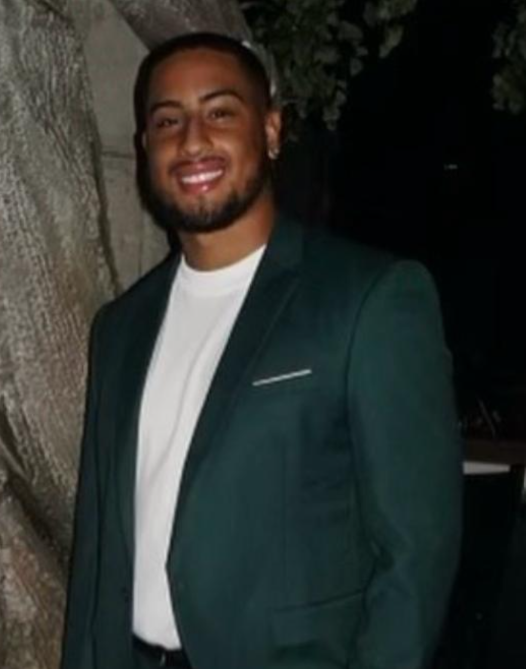
Master Level Intern
I am a professional in the field of social work and mental health, with an academic and professional career that began in the area of criminal justice. I got a degree in Criminal Justice and then a master's degree in Crime and International Justice at John Jay College of Criminal Justice. I am currently doing my Master's degree in Social Work (MSW), a training that has allowed me to expand my perspective and to understand in a more comprehensive way how mental health, family relations, trauma and the environment in which we live can influence our well-being.
Throughout my professional experience I have had the opportunity to work with children, adults and families who go through different situations and times of difficulty. I now work with unaccompanied minors who have arrived in the United States and who have subsequently been reunited with family members or sponsors. This experience has allowed me to accompany children and adolescents who face significant changes in their lives and who have often had to adapt to completely new circumstances.
I have also worked with families involved with ACS who faced the possibility of family separation, as well as with persons involved in the criminal justice system who were experiencing difficulties related to mental health, substance use, trauma and other complex situations. My experience includes case management, crisis intervention, family stabilization and monitoring roles.
These experiences have strengthened my interest in understanding people beyond the immediate situation they are facing. I think that many times what we see as a problem is just a part of a much broader story. The experiences we have experienced, our relationships, our family, our environment and the circumstances around us can have a profound impact on the way we think, feel and respond to the difficulties.
My main areas of experience include work with children and families, crisis intervention, family stabilization, mental health and trauma. I also have experience with people involved in the criminal justice system and families who go through important transitions. As I continue to develop my clinical training, I have a particular interest in working with children and adolescents who face challenges such as anxiety, self-esteem, emotional regulation and other difficulties related to their mental health.
As a trained therapist, I would describe my style as comprehensive and collaborative. It is important for me to accept each person as he arrives and to create a comfortable, safe and unprejudiced space where he can feel heard and understood. I do not think there is a single way of doing therapy, so I consider it important to adapt my approach to the needs, experiences, strengths and objectives of each client.
My desire to become a therapist was born of something very simple: I want to help people feel heard, understood and accompanied during difficult times of their lives. Through my different professional experiences I found out how much I value building relationships of trust and helping people to recognize their own strengths.
Therapy allows me to go beyond trying to solve only the problem a person is facing at that time. I am interested in understanding what is behind what you are feeling, where these emotions can come from, and how we can develop healthier tools and ways to face the difficulties. Above all, I want to offer a space where every person can feel free to be who he is without fear of being judged.
My training remains a very important part of my professional development. I keep up to date through my postgraduate studies, clinical supervision, training and research in the field of mental health. I also consider it very valuable to learn from other professionals and to remain open to new perspectives, techniques and approaches that can help me to provide better accompaniment.
One of the communities with which I have a special interest in working is the Hispanic and bilingual community. Stigma around therapy and mental health remains a barrier for many people and, in particular, I have observed that it may be even more difficult for some men to recognize that they need support or to feel comfortable talking about what they are living on.
I want to help change that perception and help create a space where people can talk about their mental health more freely, without being ashamed or afraid of being judged. I think seeking support does not mean that a person is weak; it means he is willing to recognize what he needs and work to be better.
I also understand that starting therapy can generate nerves, doubts or uncertainty. You don't have to get there with everything solved or know exactly what to say. The first step may be simply to recognize that something in your life doesn't feel right or that you want something to change.
For me, therapy is a collaborative process. My goal is not to tell you who you should be or give you all the answers, but to accompany you as you better understand what you are living, recognize your strengths and find tools that will allow you to move forward.
I continue to grow and learn as a professional, but there is something that remains constant in my work: I want people who come to this space to know that they can be heard, understood and accompanied without being judged.