Signs that your child needs therapy
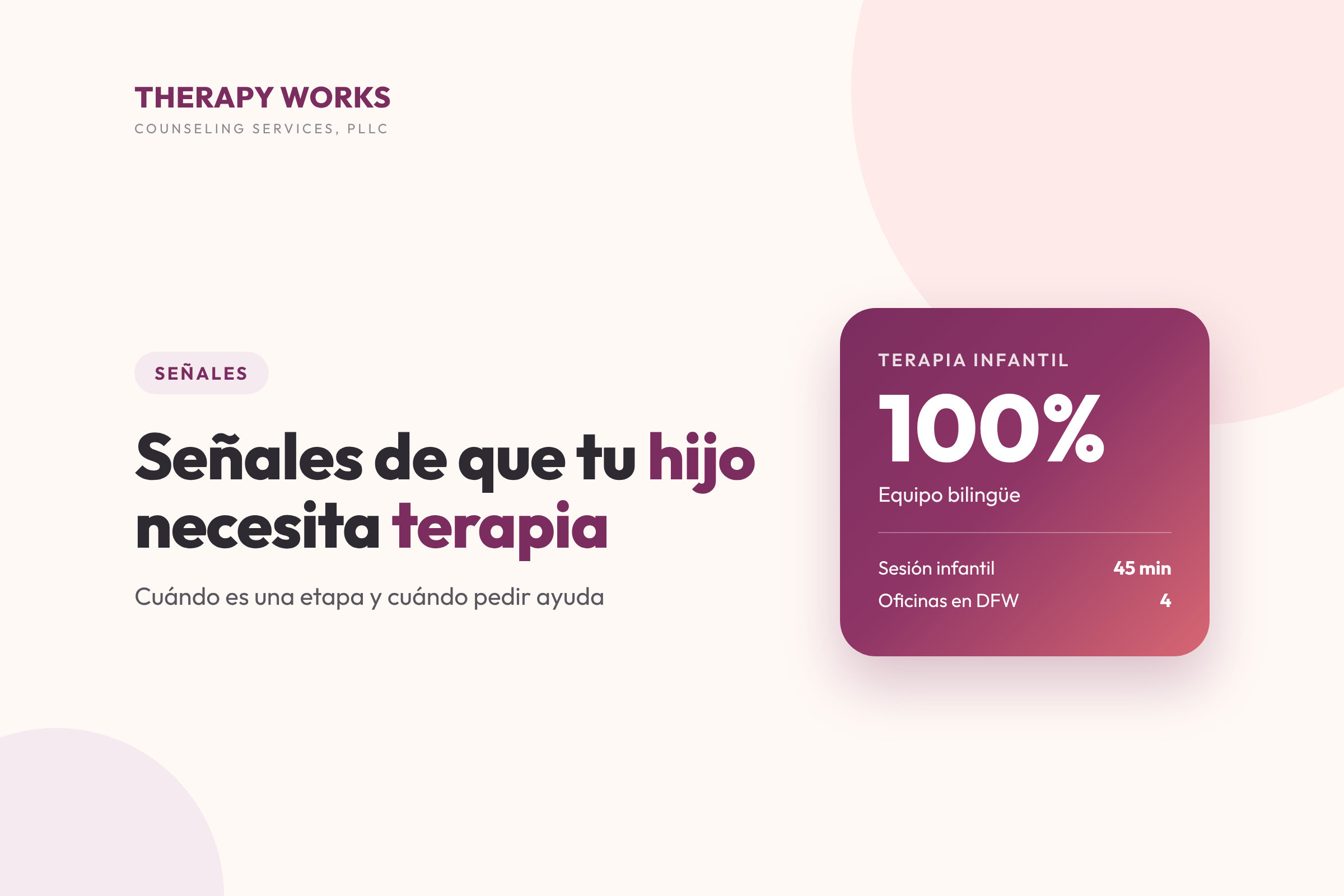
Short answer: If your child has been experiencing mood or behavioral changes for weeks, having problems at school or with friends, or struggling to adapt to a family change, it's worth checking in. child therapy in Spanish from Therapy Works uses play, art, and conversation according to age, in 45-minute sessions and with parents as part of the process.
No parent wants to overreact, but neither do they want to overlook something important. Here are the most common signs, when it's time to ask for help, and what therapy for children is like.
How do I know if it's a phase or something more?
All children have tough days, tantrums, or periods of shyness. The difference lies in three things:
- How long does it last? weeks, not a couple of days.
- How strong is it: more intense than you would expect for his age.
- How much it affects your life: at home, at school, or with friends.
If what you see meets all three, you don't have to wait for it to “pass.” Early intervention makes a big difference.
What are the signs that my child needs therapy?
changes in mood
- You are sad, irritable, or angry almost all the time.
- Cries easily or seems worried about everything.
- They no longer enjoy what they used to like.
Behavioral changes
- Increasing tantrums, aggressiveness, or disobedience.
- Returns to behaviors from when he was younger, such as bedwetting or talking like a baby.
- Major changes in sleep or eating.
- Frequent stomachaches or headaches with no medical cause.
At school and with friends
- Their grades drop or they don't want to go to school.
- You frequently receive complaints from teachers.
- They isolate themselves, have no friends, or are constantly getting into fights.
After a change or a loss
- A divorce or separation, a move, the death of a family member or a pet.
- A scare or an experience that left its mark on him.
- The arrival of a little brother or changes in who cares for him.
What issues are addressed in child therapy?
At Therapy Works, we support children with:
| Theme | Examples |
|---|---|
| Anxiety and depression | Fears, constant worry, sadness |
| Behavior | Tantrums, aggressiveness, attention problems at home or in class |
| Family conflicts | Arguments at home, parents separating |
| Trauma and grief | Losses, scares, difficult experiences |
| Development and learning | Difficulties in school |
| Welfare | Few friends, rejection, or fights with peers |
You don't need a “diagnosis” to get started. The therapist assesses what is going on and explains the plan to you.
What is therapy for children like at Therapy Works?
With the youngest children, we work mainly through play and by providing guidance to the parents. As they grow, there is more conversation.
- 45 minutes sessions, usually every week, as recommended by the specialist.
- Techniques: play therapy, cognitive-behavioral therapy, art and music therapy, and family therapy when needed.
- Involved parents: We provide guidance for home and review progress together, taking care to maintain the child's space of trust.
- In Spanish, English, or both: Our team is bilingual, so your child can speak in whichever language they feel most comfortable with.
- Where: at our offices in Dallas, Bedford, Garland, and Frisco.
If the problem stems from the dynamics of the entire household, it may help to 9-29 FAMILY PSYCHOTHERAPY PROCEDURES. You may also be interested in When family therapy helps with arguments at home.
What if my child is already a teenager?
For older kids, we have therapy for adolescents. If your child doesn't want to go, read How to talk about it when your teenager doesn't want to go to a psychologist and why it matters early intervention in adolescents.
How do I explain to my child that they are going to therapy?
Use simple words and avoid blame. For example: “You're going to see someone who helps children with their feelings. You're going to talk and play.”
Avoid presenting it as a punishment or saying that “something is wrong” with them. And tell them that you're going to participate too.
When should you not wait?
Seek help immediately if your child talks about harming themselves or not wanting to live, if they hurt themselves, or if you see something that makes you fear for their safety. Call or text the Suicide and Crisis Prevention Line 988, free of charge and 24 hours a day, or 911 in an emergency.
How do I start?
Write to us and we will advise you on the type of therapy that is best suited according to age and what is happening. If you have insurance, check What insurance we accept and the cost without insurance.
Frequently Asked Questions about Child Therapy in Spanish
From what age can a child go to therapy?
You can start from an early age. With the youngest children, we work through play and guidance for parents.
How long does a child therapy session last?
45 minutes, usually once a week, as recommended by the specialist.
Do the parents attend the session?
Parents are part of the process: they receive guidance for home and review progress with the therapist, taking care to maintain the child's space of trust.
Can my child have therapy in Spanish or English?
Yes. Our team is bilingual, and sessions can be held in Spanish, English, or both.
What is play therapy?
It is a form of therapy in which the child expresses what they feel through play, which is their natural language. This way, they can show what they still don't know how to say with words.
Make the first move.
If anything on this list sounds familiar, write to us. We help you understand what your child needs, in Spanish and without obligation. You can also call (972) 695-3421, schedule your appointment or I can see our offices in Dallas–Fort Worth.